
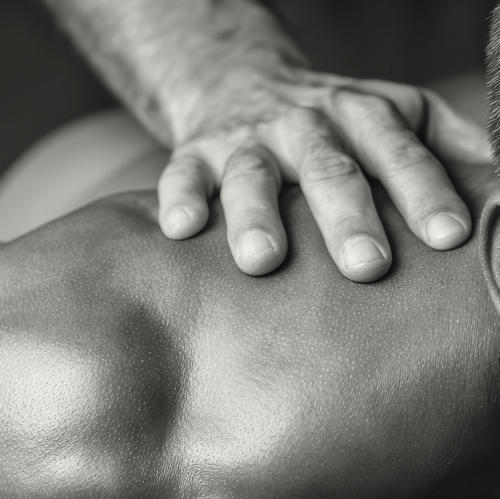
27 Oct Sports Massage for Bodybuilders and Strength Athletes
Sports Massage for Bodybuilders and Strength Athletes
Can Massage Help with Recovery and Muscular Discomfort?
Whether you’re building muscle, working toward a new personal best, or simply enjoying regular gym sessions, you’re probably familiar with that feeling of sore, stiff, or tired muscles after a demanding workout.
Maybe your legs feel heavy after squats, your shoulders feel tight after an upper-body session, or you’re struggling to get comfortable after a particularly challenging week of training.
It’s natural to wonder whether sports massage could help.
As a Level 5 qualified sports and remedial massage therapist, I’ve been practising since 2012 and have a background in personal training, so I understand the demands regular exercise can place on the body.
Massage isn’t just for professional athletes. It can also be a worthwhile option for bodybuilders, powerlifters, weightlifters and anyone who regularly undertakes strength training.
So, what are the potential benefits, when might you consider treatment, and how can massage fit around your training?
Why do muscles feel sore after strength training?
If you’ve ever struggled to walk downstairs after a demanding leg session, you’ve probably experienced delayed onset muscle soreness, commonly known as DOMS.
This often develops after unfamiliar or particularly demanding exercise and usually peaks between 24 and 72 hours later.
It’s particularly common when you introduce new exercises, increase training volume or return to the gym after a break.
Exercises involving controlled muscle lengthening under load, such as lowering into a squat or performing a Romanian deadlift, can contribute to this soreness.
Although sometimes uncomfortable, DOMS is a common response to exercise and generally settles within a few days.
Remember, you don’t need to feel sore after every workout to make progress.
As your body adapts to regular training, you may feel less soreness while still building strength and muscle.
How can sports massage help after weight training?
One of the main reasons people consider massage is to help manage the muscular discomfort that can follow a demanding workout.
Research suggests massage may offer several benefits, particularly for post-exercise soreness and short-term flexibility.
For someone who regularly trains with weights, this could mean feeling less sore after a demanding session or finding certain movements a little more comfortable.
Massage also offers a chance to relax and unwind, especially when you’re balancing training with work, family and everyday responsibilities.
Some of the reasons people consider treatment include:
- Post-exercise soreness: Helping reduce DOMS-related discomfort.
- Muscular tension: Managing feelings of tightness or discomfort following training.
- Movement comfort: Potential short-term improvements in flexibility and ease of movement.
- Relaxation: Taking time to unwind between physically demanding activities.
- Personalised care: Treatment focused on your specific concerns rather than a standard routine.
Not everyone will experience the same benefits, but if you enjoy regular exercise, feeling more comfortable between sessions can be a worthwhile reason to consider massage.
What does the research say?
A 2020 systematic review published in BMJ Open Sport & Exercise Medicine examined 29 studies involving 1,012 participants. Researchers found that massage was associated with small improvements in muscle soreness and flexibility.
A further review published in Sports Medicine in 2025 also identified potential benefits for delayed onset muscle soreness, although the quality of the available evidence varied.
Research hasn’t convincingly demonstrated that massage directly increases muscle growth or strength. However, its potential benefits for soreness, comfort and relaxation may still make it a useful addition to someone’s training routine.
For me, that distinction matters. Massage doesn’t need to promise improved performance to be worthwhile.
Massage for bodybuilders: managing the demands of training
Bodybuilding places particular emphasis on developing muscular size, shape and definition.
Training often involves multiple exercises targeting specific muscle groups, repeated sets and relatively high training volumes.
For example, a demanding leg session might include squats, leg presses, lunges and hamstring exercises, placing considerable demands on the lower body.
Similarly, regular chest, back and shoulder sessions can leave certain muscles feeling worked, tired or uncomfortable.
While this is often part of training, soreness or stiffness can become frustrating when it affects how comfortable you feel during everyday activities.
Sports massage may help reduce post-exercise soreness and give you a chance to relax between demanding sessions.
Whether you’re preparing for a bodybuilding competition or simply enjoy building muscle, I can tailor treatment to your training schedule and how you’re feeling.
The aim isn’t to interfere with your gym work, but to provide a treatment experience that complements your routine.
Massage for powerlifters and strength athletes
Powerlifting, Olympic weightlifting and general strength training all place considerable demands on the body, though their movements and training goals differ.
Heavy squats, deadlifts, pressing exercises and explosive lifts require strength, coordination and control across multiple muscle groups.
You might notice recurring tightness around your shoulders, upper back, hips or legs, especially during demanding training.
However, where you feel discomfort isn’t always the complete picture.
For example, if your shoulders regularly feel tight after bench pressing, I’d want to understand more than simply which muscles are uncomfortable.
How frequently are you training? Has your workload recently increased? Does the discomfort occur while lifting or afterwards? Is it affecting your everyday movement?
These details help me understand what you’re experiencing and whether massage might be an appropriate option.
The same applies if you’re a recreational gym-goer. You don’t need to compete or lift exceptionally heavy weights for your concerns to deserve attention.
When is the best time to book a sports massage?
There’s no single answer because everyone’s training schedule and response to treatment differ.
Some people prefer massage after demanding training periods, while others find a lighter-week appointment works better.
After a demanding workout
If you’re experiencing general muscular soreness, massage may help you feel more comfortable. However, if an area is particularly tender, a gentler approach may be more appropriate than intensive treatment.
During regular strength training
If you train several times a week, consider where massage fits into your programme.
For example, if you have a heavy lower-body session planned the following morning, I’d take that into account when deciding how to approach treatment.
During a deload or recovery week
Some people find that a lighter training week offers a convenient opportunity to book an appointment, manage muscular discomfort and relax.
Before a competition or personal-best attempt
If you’re preparing for an important event, it’s sensible to plan treatment around your training and avoid introducing unfamiliar or particularly intensive techniques immediately beforehand.
The important thing is choosing treatment that complements your training rather than unnecessarily disrupting it.
Does deep tissue massage need to hurt to be effective?
One common belief is that the deeper or more uncomfortable a massage feels, the more effective it must be.
That’s not necessarily true.
Although firmer pressure can sometimes be appropriate, it doesn’t automatically mean better results, particularly if your muscles are already sensitive following exercise.
I adapt the pressure and techniques according to your comfort, symptoms and response to treatment.
Good massage isn’t about seeing how much discomfort you can tolerate. It’s about finding an approach that’s right for you.
If you’re interested in how I choose between different massage techniques, I’ve explored this further in my previous article:
What Type of Massage Do I Need? Why You Don’t Need to Decide Before You Book
Making massage part of your training routine
If you regularly undertake strength training, you’ll already appreciate the importance of balancing exercise with adequate recovery.
Sleep, nutrition, hydration and managing your training workload all play important roles.
Massage can sit alongside these habits as another option for managing muscular soreness, comfort and relaxation.
You don’t need to book it after every workout, either. Some people enjoy regular appointments, while others prefer to book when they’re experiencing particular discomfort or simply feel they would benefit from treatment.
No fixed frequency suits everyone, and it’s also important to recognise when something may need further investigation. If you have sharp or worsening pain, significant swelling, unusual weakness or symptoms that don’t resemble normal post-exercise soreness, seek medical advice rather than treating it with massage alone.
What can you expect when you book with me?
One thing I’ve learned from treating clients over the years is that two people can experience similar muscular discomfort but have quite different needs.
My experience in both massage therapy and personal training helps me consider not just your symptoms, but also your activities and how they might be affecting you.
If you regularly lift weights, I’ll want to understand your training routine, what you’re working towards and what’s been bothering you.
Perhaps you’ve been experiencing persistent tightness around your shoulders, soreness after lower-body sessions or discomfort that affects how you move.
Before treatment begins, we’ll discuss your symptoms, relevant health information and what you’d like to achieve.
Depending on your needs, I may use sports massage, remedial massage, deep tissue techniques or other appropriate soft tissue approaches.
Throughout the appointment, I can adjust the treatment based on how you’re responding.
Is sports massage worth considering if you lift weights?
Whether you’re training for a bodybuilding competition, working towards a new personal best or simply enjoying regular gym sessions, massage may be a worthwhile addition to your routine.
It may help you manage post-exercise soreness, ease feelings of muscular tightness, or simply give you a chance to relax between demanding training sessions.
You don’t need to be an elite athlete or have a particular problem to book an appointment.
For some people, massage helps manage the demands of training. For others, it’s simply about taking time to look after themselves.
Whatever your reason for considering treatment, the important thing is finding an approach that suits you.
Looking for sports massage in Higham Ferrers?
If you’re a bodybuilder, strength athlete or regular gym-goer looking for massage therapy in Higham Ferrers, Rushden or the surrounding Northamptonshire area, you’re welcome to book an appointment.
At Mark Bailey Massage Therapy, I’ll take the time to understand your training, what’s been bothering you and what you’d like to achieve before tailoring your treatment.
Whether you’re managing soreness after a demanding workout or simply want to feel more comfortable and relaxed, you don’t need to choose a particular massage technique.
Just choose an appointment duration, and I’ll take care of the rest.
Appointment options:
- 30 minutes: £30
- 60 minutes: £45
- 90 minutes: £70 – available on request
New clients: I recommend booking a 60-minute appointment to allow time for your initial consultation and assessment.
Research and Further Reading
Davis, H. L., Alabed, S. & Chico, T. J. A. (2020).
Effect of sports massage on performance and recovery: a systematic review and meta-analysis. BMJ Open Sport & Exercise Medicine, 6(1), e000614.
Wiecha, S. et al. (2025).
Physical Therapies for Delayed-Onset Muscle Soreness: An Umbrella and Mapping Systematic Review with Meta-meta-analysis. Sports Medicine, 55, 1183–1212.
Dakić, M. et al. (2023).
The Effects of Massage Therapy on Sport and Exercise Performance: A Systematic Review. Sports, 11(6), 110.
Thanks for reading, Mark
READY WHEN YOU ARE
Ready to book your appointment?
You don’t need to choose a massage technique. Simply select the appointment duration that suits you, and I’ll tailor your treatment to your individual needs.
No Comments